
Get quote
Get Free Consultation!
We are ready to answer right now! free consultation.

Roof repair in Toronto is the right direction when an inspection identifies a limited problem, the surrounding roof can support an integrated correction and the work addresses the plausible water route—not only the indoor symptom. Replacement deserves discussion when deterioration or recurring trouble extends across connected roof areas, when critical details cannot be restored through a local scope, or when the project objective covers the larger assembly. Age alone should not make the decision.
King Roofing & Construction offers inspection, maintenance, repair and replacement for asphalt-shingle and flat roofs. Its published process emphasizes condition-based recommendations. That makes the repair-or-replace question a comparison among the affected detail, surrounding materials, roof geometry, drainage and history rather than a rule based on one photo.
First identify whether the concern belongs to a sloped shingle roof, a flat or low-slope section, or a transition between them. On shingles, the relevant system can include courses, underlayment, valleys, wall and penetration flashing, eaves and gutters. On a flat roof, the relevant area may be a drainage zone with seams, surface conditions, perimeters, penetrations and an outlet or edge.
The interior location matters, but it is not a roof map by itself. Water can travel before it appears at a ceiling or wall. Record when the symptom occurs, which weather was present, whether it has returned, and any previous work in the area. Then let the exterior review test possible routes.
The defect is localized, adjacent materials appear serviceable, the repair can tie into compatible surrounding details, and the scope explains what it will and will not address.
The concern involves a valley, wall transition, multiple nearby penetrations or another assembly where treating one visible point would leave the water route incomplete.
Widespread condition changes, repeated failures across connected areas or an assembly that cannot support a reliable local integration may make renewal more coherent than another isolated intervention.
A visibly displaced shingle in the open field is different from a problem beside a valley, dormer wall or penetration. In the open field, a repair may be able to integrate with nearby courses if those materials remain suitable. At a junction, the scope must account for flashing and water direction. Simply covering the visible spot without understanding the junction can leave the actual route unchanged.
| Observed shingle condition | What the inspection must still establish | Decision implication |
|---|---|---|
| One small visible surface defect | Adjacent course condition, fastening area, underlayment limits and nearby transitions | May support a focused scope; not enough to diagnose remotely |
| Concern near a valley or wall | How water enters and leaves the junction, flashing condition and connected slopes | Repair boundary may need to include the whole detail |
| Similar visible wear on several slopes | Distribution, severity, repair history and ability to integrate local work | Broader renewal may deserve comparison |
| Recurring interior mark after earlier repair | Whether the prior work treated the source, another route exists or the scope was incomplete | Reinspect before repeating the same treatment |
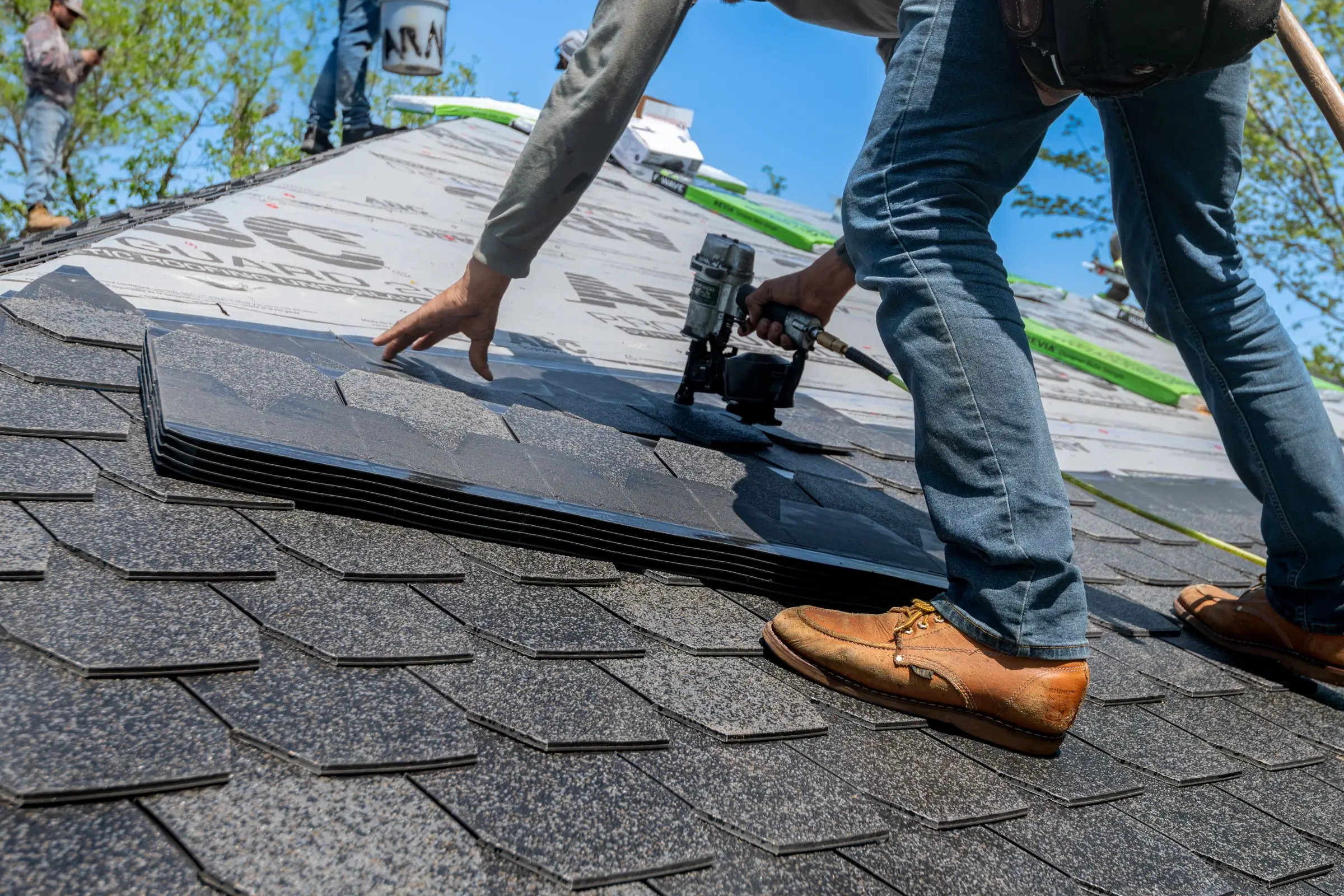
A flat roof is not truly level in its intended function; it must direct water toward outlets or edges. When a concern appears, define the affected zone. Note the nearest drain path, perimeter, penetration and transition. Surface wear, open details or persistent water may be visible, but each observation needs context from the surrounding area.
A local flat-roof repair can be sensible when a defined condition can be addressed and integrated with a serviceable surrounding system. If water problems recur across the same broad zone, if multiple connected details are affected, or if the surrounding surface cannot support the proposed treatment, repeating a small patch may not resolve the project-level issue. The contractor should explain what changed in the decision.
Equipment, vents and other penetrations interrupt the roof surface. Edges and wall transitions also require continuous detailing. If the observed water lies close to one of these features, the repair scope should identify it. A rectangle drawn around the wet interior area may not match the exterior drainage route.
Water remaining after rain, debris near an outlet or staining at an edge can guide the review. They do not automatically prove the cause of an interior leak or establish the condition of concealed layers. Record when the observation was made and let the site assessment connect it to material and detail conditions.
Previous work is important when the same symptom returns. Gather invoices, labelled photos or even a plain description of the area treated. The useful question is not whether a past contractor “fixed the roof”; it is which roof component and area were actually included. A treatment at one visible opening may have been sound while a separate route remained. Alternatively, surrounding deterioration may now prevent the original localized approach from being repeated.
Recurring-leak scenario: A ceiling mark near a rear wall returned months after shingles were changed above it. The home also has a low-slope addition meeting that wall. The next review should map the shingle slope, wall flashing, transition and flat section together. Replacing the same shingles again would be an assumption until those connected details are examined.
A smaller immediate scope is not automatically the lower-risk choice, and a larger scope is not automatically better. A repair may preserve serviceable roof areas and focus resources on a confirmed detail. Its limitation is that it does not renew unrelated components. Replacement can address a broader assembly and create more consistent transitions, but it involves more material, labour, site activity and decisions.
Ask each scope to state the area, components, objective and exclusions. For repair, understand how the work ties into the existing surface and what conditions would make that tie-in unsuitable. For replacement, understand which slopes or zones are included, how valleys and penetrations are detailed, what happens at additions, and whether gutters, ventilation or exterior details are inside or outside the work.
If one contractor proposes repair and another replacement, ask both to mark the same roof diagram. Which observations lead to the different boundary? Does one proposal include an addition the other excludes? Is one relying on a condition the other did not see? This can reveal a genuine difference in assessment instead of turning the decision into a contest between two unexplained prices.
Rain, wind, freezing conditions, snow and thawing can change when a symptom appears. Write down the event without converting it into a cause. Wind-driven rain may direct water toward a junction that stays dry in calm rain. Snowmelt may expose a drainage limitation. Frost on shingles or attic observations may raise questions about insulation, air leakage and ventilation that extend beyond a surface repair.
Photos taken safely during or after an event can help if they are labelled by location and time. Do not go onto the roof. A contractor can use the record to focus the inspection and should still separate what the image shows from what remains to be confirmed.

The written repair should identify the roof area and component, surrounding material required for integration, access, property protection, weather assumptions and how concealed conditions will be communicated. It should avoid promising that a symptom has only one possible route if the inspection could not establish that. This does not make the scope weak; it makes the known and unknown boundaries visible.
During the final review, return to the same location. Confirm what was repaired, which adjacent details were included and what maintenance or observation applies afterward. Keep this record with the property history. If the concern returns, the next review can distinguish the treated area from the rest of the roof.
A repair objective should be tied to the condition identified during inspection. If the problem is a defined flashing junction, the work should describe how that junction is restored and integrated with the surrounding surface. If the concern is drainage at a flat-roof outlet, the scope should identify the affected zone and the detail being addressed. “Stop all future leaks” is not a useful component description because unrelated areas and concealed routes may exist.
The follow-up plan can also be specific. For a shingle repair beside a valley, the homeowner may observe the corresponding interior area during later rain and keep gutters below the valley clear. For a flat-roof repair, the property representative may monitor the same drainage zone from an authorized safe location. This is not a substitute for contractor review; it gives any later report a consistent place and context.
Removing debris, keeping gutters or outlets functional and reviewing visible sealant-dependent details can reduce avoidable stress on a serviceable system. Maintenance does not change the age or condition of unrelated roof areas. The contractor should distinguish care for the repaired component from a claim that the entire roof has been renewed.
Ask that any before-and-after images be labelled front slope, rear valley, dormer wall, flat-roof outlet or another unambiguous location. A close-up without context can be difficult to place later. One wider image can show the location, while a detail image can show the work. Together with the written scope, that pair creates a record a future reviewer can understand.
If the repair was made near a transition between roof types, the record should show both sides of the junction. This is especially helpful on Toronto homes with a sloped main roof and a low-slope addition. It keeps future maintenance focused on the connected assembly rather than letting the history fragment into separate, incomplete notes.
A good roof repair Toronto recommendation may cover one small component, an entire junction, or a connected roof section. Its size should follow the condition and the ability to integrate the work. Replacement should enter only when the broader assembly evidence supports it—not because a simple rule says every leak or every older roof needs renewal.
The owner’s clearest safeguard is a roof-area map that connects every proposed action to an inspected condition.
Keep that map with the repair invoice and labelled completion images. If a future observation appears on another slope or drainage zone, the record will show that it is outside the earlier boundary instead of letting the phrase “roof repaired” create a misleading expectation.
For water-path diagnosis, continue with the Toronto roof leak guide. Homeowners focused on shingles can compare shingle repair layers, while low-slope owners can review flat roof repair and drainage zones. If replacement is now part of the decision, use the Toronto replacement scope guide to compare components consistently.

