

Roof Repair Near Me: Prepare the Property Before the Contractor Arrives

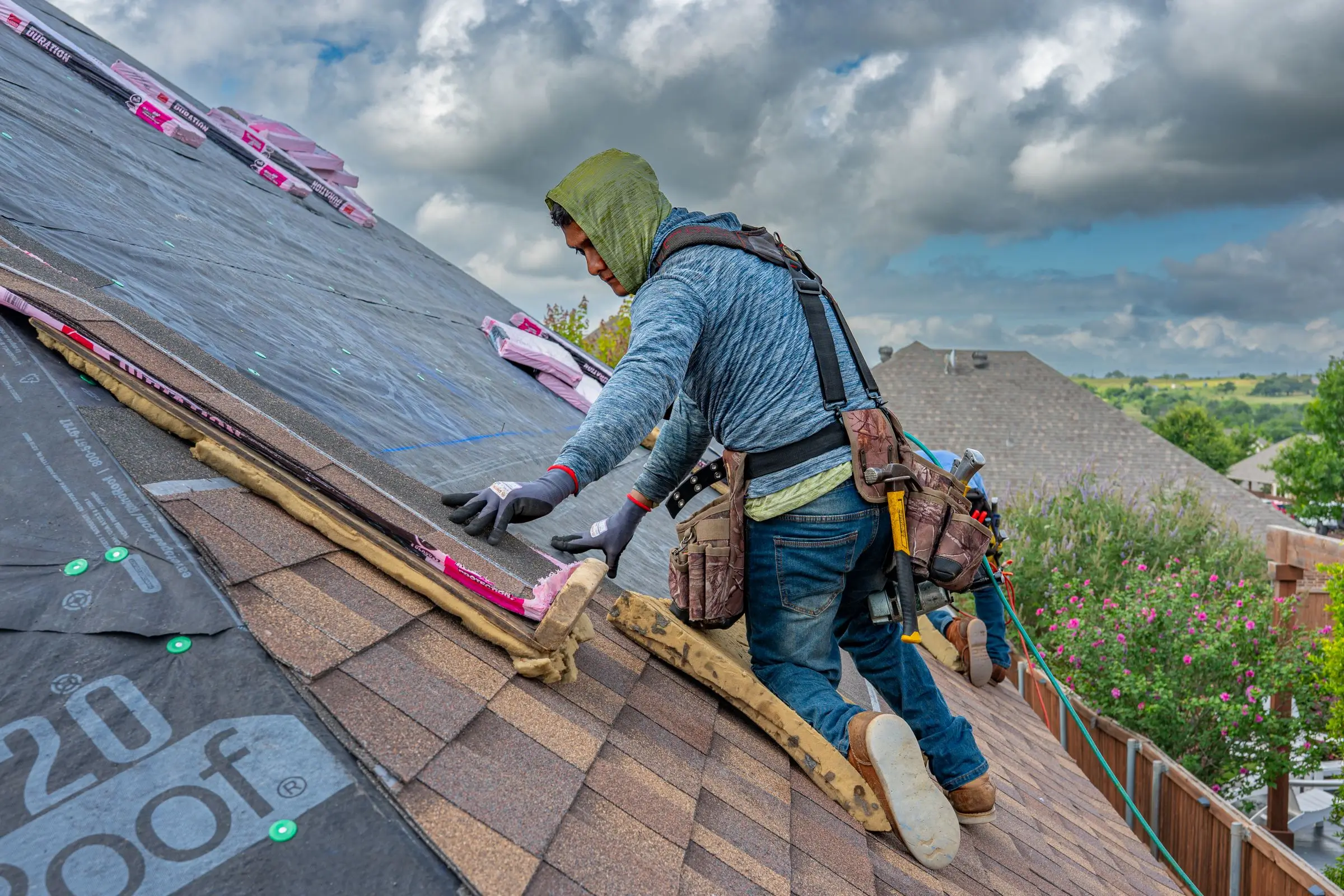
If you are looking for roof repair near me, prepare the property so the first visit can answer the right question. Provide the address, roof type, exact interior or exterior concern, event timing, earlier repairs, additions, safe access information and ground-level photos. Do not prescribe a patch before the roof is reviewed. The useful local contractor is the one who connects your evidence to a specific shingle, flashing, valley, flat-roof, penetration or drainage scope.
King Roofing & Construction serves Toronto and surrounding areas with inspection, maintenance, repair and replacement for residential and commercial shingle and flat roofs. The site does not publish every municipality or promise emergency response, so confirm the address and timing directly. This guide focuses on making a scheduled assessment more productive and safer.
Prepare six items before a roof repair near me visit
A one-sentence condition report
Describe what you observed and where: “A mark appeared on the rear bedroom ceiling during wind-driven rain.” Avoid turning the sentence into a diagnosis.
A simple property and roof sketch
Mark main slopes, garage, porch, additions, valleys, dormers and flat sections. Place the interior symptom beneath the sketch.
A short event history
Record dates, general weather and whether the condition changed. Include earlier work only when you can identify the area treated.
Safe interior and ground-level images
Use a wide image for location and a closer image for detail. Do not climb onto the roof, especially in rain, snow, ice or wind.
Property access constraints
Identify gates, tenants, pets, driveway use, neighbouring areas, rooftop authorization and the best site contact.
The decision you need
State whether you need the source investigated, a known defect assessed, maintenance planned or repair compared with replacement.
These items let a contractor begin with a roof-area hypothesis without promising a remote diagnosis. They also reduce the chance that a visible symptom becomes the entire scope before valleys, flashing, penetrations or drainage have been considered.
Use the visit to distinguish the symptom from the roof component
A ceiling stain is a symptom. A displaced shingle is a visible condition. An open flashing detail, affected valley, penetration transition or flat-roof seam is a roof component that may require repair. The assessment should explain how the observations relate and which remain unconnected.
| What the owner can show | What the contractor needs to determine |
|---|---|
| Interior mark and event timing | Plausible exterior routes and whether the roof is the source |
| Ground photo of visible shingle change | Surrounding course condition, integration area and nearby junctions |
| Gutter overflow at one eave | Valley concentration, blockage, receiving capacity and roof-edge condition |
| Water observed on a flat roof by authorized staff | Drainage zone, outlet, surface, penetration and perimeter relationships |
Nearby does not mean every contractor serves every roof system
Confirm that the contractor works with the property’s actual roof. Asphalt-shingle repair relies on layered courses, suitable surrounding material, underlayment limits and flashing details. Flat-roof repair follows drainage zones and requires compatibility with the existing surface, penetrations and perimeters. A mixed-roof home needs both sides of the transition considered.
King Roofing’s site verifies service for shingle and flat systems, including residential and commercial contexts. It does not name proprietary material lines. Ask the project proposal to identify the actual repair material and system where that information affects the decision.
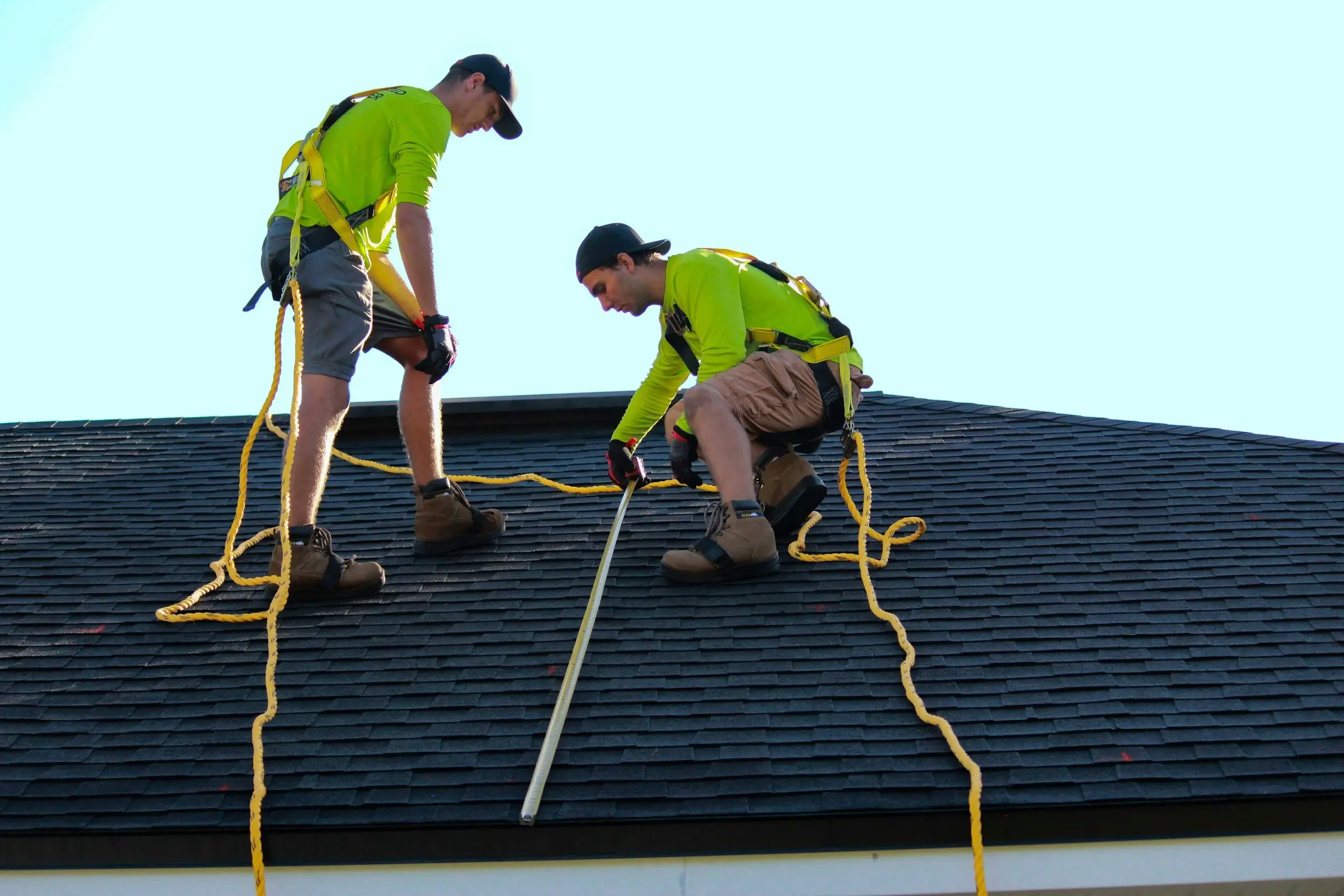
Ask the contractor to mark the repair boundary on the roof sketch
A line on the sketch can reveal more than a broad description. Does the repair cover one open-field shingle area, both sides of a valley, a complete dormer wall junction, one penetration or the flat-roof zone feeding an outlet? Which surrounding materials are needed to integrate the work? What remains outside the boundary?
If replacement is proposed instead, ask the contractor to mark that boundary on the same sketch. The difference may be one full slope, a connected low-slope section or the complete assembly. Comparing the two options on one map makes the reasoning visible and shows whether the proposals are even addressing the same roof.
Local-home scenario: A homeowner reports a missing shingle above the garage and water near the rear addition. These may be separate conditions. The visit should map the garage slope and the addition transition independently before one repair price is used to describe both.
Compare repair proposals by included details and assumptions
Put each scope beside the same sketch and event history. A useful proposal identifies the component, integration area, access, property protection, weather constraints and process for concealed findings. It should also separate roofing from related gutter, soffit, fascia, siding or ventilation work when those components appear near the concern.
One price may cover only a visible piece while another covers a complete junction. That does not make either automatically correct. Ask what inspection evidence supports the boundary. If the contractor could not see a concealed layer, the scope should acknowledge that instead of treating an assumption as a confirmed defect.
Clarify whether the objective is repair or water-path investigation
A known damaged component can be repaired even when no interior leak exists. A water symptom can be investigated even when no obvious surface damage appears. If your request includes both, make sure the scope identifies them separately. Otherwise, completion of one visible repair may be misunderstood as proof about an uncertain leak route.
Property protection should fit the size and location of the repair
A rear-valley repair needs a different material route from work above the front driveway. A flat-roof penetration over an occupied store needs different communication from a shingle repair above an empty garage. Identify entrances, gardens, vehicles, tenant areas and neighbour-facing boundaries connected to the affected roof section.
Ask how weather can change the work date or stopping point. Even a small repair may require enough removal to reach the complete detail. The plan should keep the area protected if conditions change and should not encourage unsafe access simply because the contractor is geographically close.
Use labelled completion evidence instead of a generic finished photo
Request one context image showing where the work sits on the roof and detail images showing the completed component if those can be supplied. Label them with the same terms used on the sketch. A close image of shingles or membrane without location becomes difficult to interpret later.
The final review should also confirm the ground area, drainage component and any exterior detail included in the scope. If a gutter was cleared but not repaired, note that. If a wall junction was repaired but the neighbouring siding was outside the work, preserve that boundary. Good records prevent a future contractor from guessing.
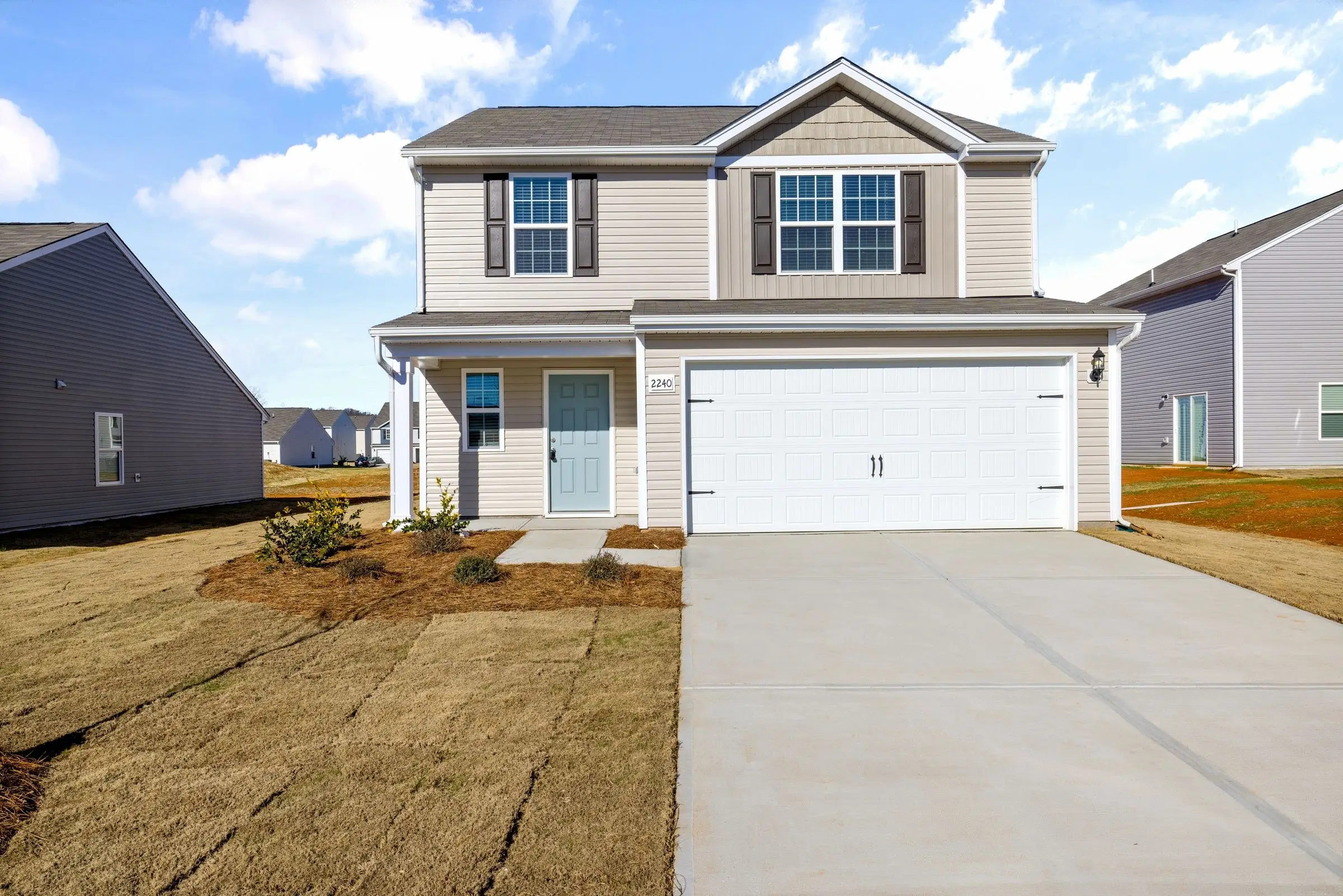
A maintenance plan should revisit the repaired water route
After a shingle repair near a valley or eave, later maintenance can review that junction and the receiving gutter. After flat-roof work, it can revisit the same outlet zone, perimeter or penetration. Maintenance does not renew unrelated roof areas; it keeps the known route visible in the property record.
Continue to log weather-linked observations without climbing. If a symptom returns, provide the date, location and repair boundary. A repeated mark in the same room under the same conditions deserves renewed path analysis. A new symptom elsewhere may belong to a different component.
Check the business details before accepting a local repair scope
A clear roof description should sit inside a clear written agreement. Confirm the contractor’s business identity, the project address, work description, price, payment stages, timing assumptions and process for changes. Ontario’s consumer guidance recommends obtaining written estimates and understanding renovation contracts rather than relying on verbal promises.
Ask who will be the project contact and who is authorized to approve additional work. If a contractor says a concealed condition may change the repair, the agreement should explain how evidence and a revised price will be presented. Do not accept a blank authorization or an undefined allowance that cannot be connected to a roof component.
Service-area confirmation should use the exact property address
“Near me” results can include businesses that market across a region but do not serve every location or roof type. Provide the address and property description before assuming availability. King Roofing describes Toronto and surrounding areas; because no complete municipality list is published, direct confirmation is the accurate next step.
Prepare the household or building for the waiting period
Between first contact and inspection, protect the interior from active moisture when safe, keep people away from affected ceiling material, and avoid electrical hazards. Do not climb onto the roof or install an improvised tarp in unsafe conditions. Photograph changes from normal occupied areas and record weather timing.
If the concern is not active water entry, avoid disturbing the visible exterior defect. Pressing down a shingle, adding sealant or clearing a roof outlet without appropriate access can change evidence and create risk. Ground-level gutter observation or interior documentation is enough for the intake stage.
Do not confuse a temporary measure with the final component repair
If a qualified contractor provides temporary protection, label its location and date. The permanent scope should still review the roof system when conditions allow. Temporary work may cover an entry point, but it does not establish surrounding material condition or renew the complete detail.
Use the first inspection to decide among maintenance, repair and renewal
A clogged gutter or outlet on an otherwise serviceable roof may need maintenance. A defined shingle, valley, flashing, penetration or flat-roof condition may need repair. Widespread or recurring problems across connected areas may justify comparing replacement. These are different service paths, and proximity should not pressure the owner into choosing one before evidence is available.
Ask which observed facts support the recommended path and what remains concealed. A local repair should explain how it joins the existing roof. A larger scope should explain why the existing area cannot support the smaller one. When the reasoning is visible, the owner can compare contractors without reducing the decision to speed or distance.
Keep separate records for separate roof concerns
A property can have a missing shingle on the garage, gutter overflow at the front valley and an old mark below a rear addition. Treat each as a distinct line on the roof map until inspection connects them. Combining them under “roof leak” can produce one vague scope that resolves none of the boundaries clearly.
After each service, record whether it was inspection, maintenance, repair or replacement and name the component. Over time, this history helps identify recurrence without assuming it. It also makes future near-me searches more efficient because the next contractor receives the correct roof areas and earlier work from the first message.
Choose local roof repair by clarity, not just travel distance
The most useful result from a roof repair near me request is a component-level recommendation that fits the property, roof system and event history. Proximity helps only after the contractor confirms the service area, can assess the actual shingle or flat roof, and writes a repair that integrates with the surrounding system.
Use King Roofing’s project intake page to organize the address, roof type and safe photos. For an uncertain water source, follow the leak investigation sequence. Shingle homeowners can read how a local shingle repair integrates with courses, while flat-roof owners can use the drainage-zone repair guide.
