
Roofing Services Toronto Property Owners Can Match to the Roof’s Condition

Roofing services in Toronto are most useful when they are matched to the roof’s actual condition. An owner who wants a preventive review needs a different deliverable from a homeowner with one lifted shingle, a manager tracing water beneath a flat roof, or a family planning replacement across several roof planes. Inspection, maintenance, repair and replacement are related, but they should not be sold as interchangeable names for the same work.
King Roofing & Construction serves Toronto and surrounding areas with residential asphalt shingle work and residential or commercial flat-roof support. The company’s real service range includes condition review, maintenance, repair and replacement, along with related flashing, gutter, ventilation, siding and exterior details. Owners can start with the company’s roofing services overview or the more focused residential roofing information.
Roofing services Toronto property owners need at different roof conditions
Service choice should follow evidence. An inspection gathers and organizes that evidence. Maintenance acts on serviceable details. Repair corrects a defined problem in a limited area. Replacement coordinates a broader roof assembly when isolated work is no longer the practical route. The boundaries can overlap—for example, an inspection may identify a maintenance item and a repair—but the written scope should say which result the owner is approving.
A roof inspection should produce a condition-based recommendation
Inspection is appropriate when the owner sees a warning sign but does not know its source, wants to review an aging roof before a leak, or needs to understand several roof areas before budgeting. The review can include the roof covering, exposed edges, valleys, walls, penetrations, flashing, drains, gutters and ventilation where access is safe. Interior or attic evidence may add context but should not be confused with a guarantee that every concealed condition is visible.
The useful output is not merely “good” or “bad.” It is a description of the relevant condition, the next action, and the reason that action fits. If a roofer recommends monitoring, the owner should know which sign to watch. If repair is recommended, the roof area and affected details should be identified. If replacement is discussed, the breadth of wear or repeated failure should be explained.
Roof maintenance keeps serviceable details from becoming larger problems
Maintenance belongs between “nothing is wrong” and “the roof has failed.” On a shingle roof, it may involve reviewing vulnerable flashing, lifted materials, sealant at appropriate details, gutters and attic ventilation openings. On a flat roof, it may involve clearing drainage routes, examining penetrations, noting surface changes and addressing a localized detail before widespread water entry occurs.
Maintenance should be tied to a specific roof and season, not delivered as a generic promise. A tree-covered property may need more attention to debris and gutters. A low-slope roof with multiple drains may require an outlet-by-outlet review. A complex roofline with valleys and dormers creates different observation points from a simple gable.
Roof repair needs a defined defect, boundary and tie-in
Repair is suited to a problem that can be isolated and integrated with the surrounding serviceable roof. The scope should identify the affected plane or low-slope zone, the damaged surface material, related underlayment or flashing that can be observed, and the way the repair will meet existing material.
Examples include missing or lifted shingles after wind, a localized flashing concern, a damaged low-slope surface area, an open seam, or a penetration that has lost a reliable water-shedding detail. “Patch leak” is not enough. The owner needs to know what is being patched and why that area is connected to the evidence.
Roof replacement coordinates more than the new visible material
Replacement may be appropriate when wear affects a large portion of the roof, materials can no longer accept a durable localized tie-in, problems recur across different areas, or inspection shows that a broader intervention is more proportionate. It should coordinate roof planes, underlayment, flashing, valleys, vents, edges and drainage rather than treating shingles or membrane as an isolated finish.
The proposal should also distinguish the main roof from additions, porch roofs and flat sections. An owner should not have to guess whether a small low-slope transition or rear roof is included. Where deck condition is concealed, the scope should describe how findings will be communicated after the covering is opened.
Residential roofing services in Toronto should treat shingles as part of an assembly
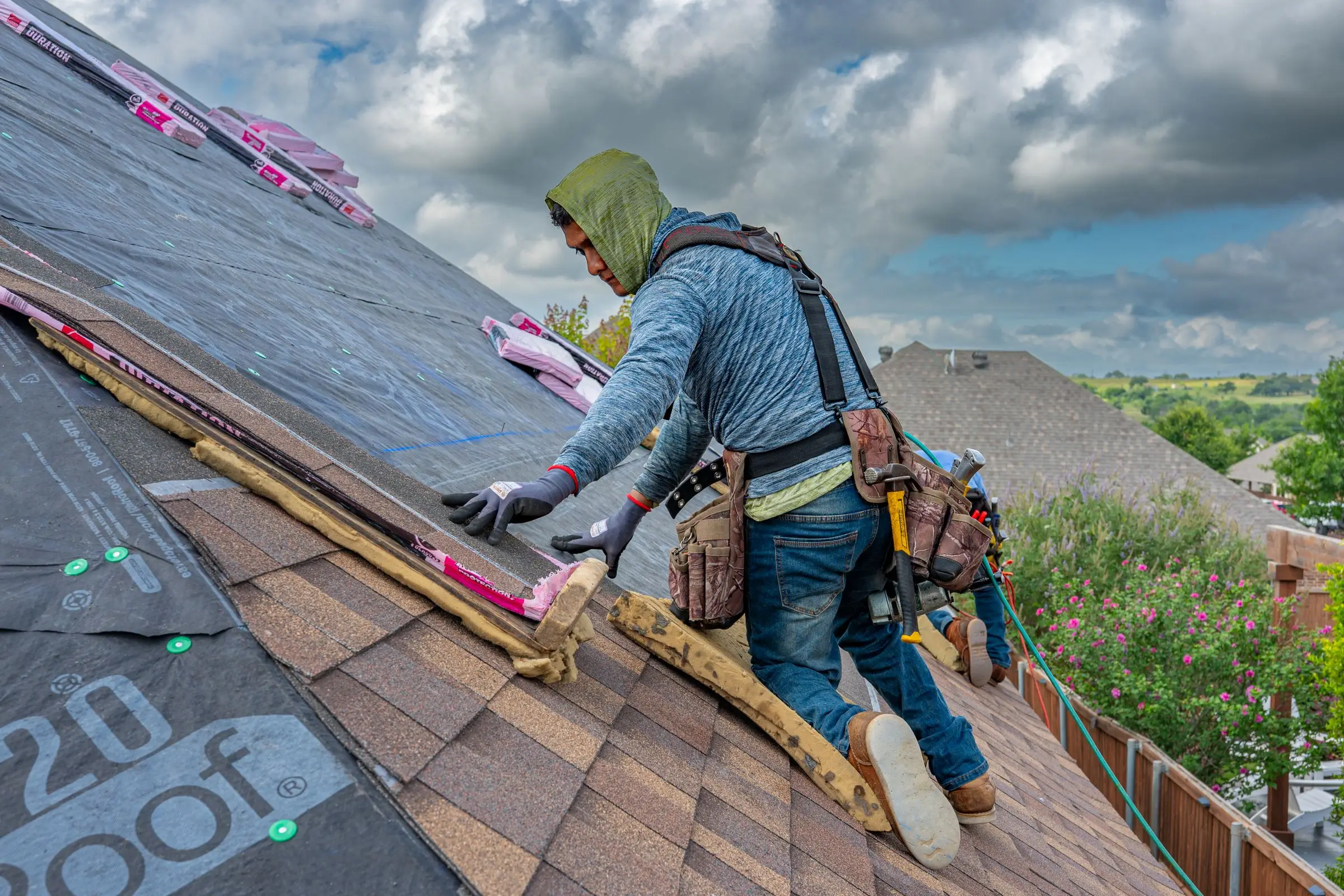
Asphalt shingles form the exposed water-shedding layer on the residential roofs represented in King Roofing’s site. Their condition matters, but performance also depends on what happens at overlaps, fasteners, underlayment, valleys, ridges, eaves, walls and penetrations. Ventilation and drainage affect the wider environment in which that surface operates.
A homeowner with a few missing shingles may need a focused repair review. The roofer should check whether surrounding shingles remain suitable for integration, whether underlayment has been exposed, and whether the damage relates to an edge or flashing detail. A homeowner with widespread curling, repeated repair areas and several vulnerable transitions may need a replacement conversation. The same material family does not require the same service at both houses.
Flashing, valleys and eaves often determine the residential scope
Flashing routes water around chimneys, walls and penetrations. Valleys receive runoff from intersecting slopes. Eaves connect the roof surface to gutters and are exposed to ice and water movement. These locations concentrate the conditions a roofing service is meant to manage. If a proposal lists shingles but omits the transition connected to the reported leak, the service definition is incomplete.
Natural Resources Canada’s roof and attic guidance also shows why the exterior and attic cannot always be separated. Ice dams and attic moisture can involve air leakage, insulation, ventilation and eave conditions. A roofing service should identify when another building issue needs to be investigated rather than attributing every mark to the shingle field.
Flat roofing services in Toronto begin with water movement
A flat roof is normally built with enough slope and drainage infrastructure to move water. The owner may not see that geometry from the ground, but it should guide inspection and repair. Drains, scuppers, perimeter gutters, low areas, seams, penetrations and terminations form the decision map.
For a residential addition or porch, the low-slope section may meet a wall or sloped shingle roof. That transition can be more important than the centre of the surface. For a commercial property, rooftop equipment, access, occupied spaces and several drainage zones can divide one visible roof into multiple service areas.
Flat-roof coating, repair and replacement are not automatic substitutes
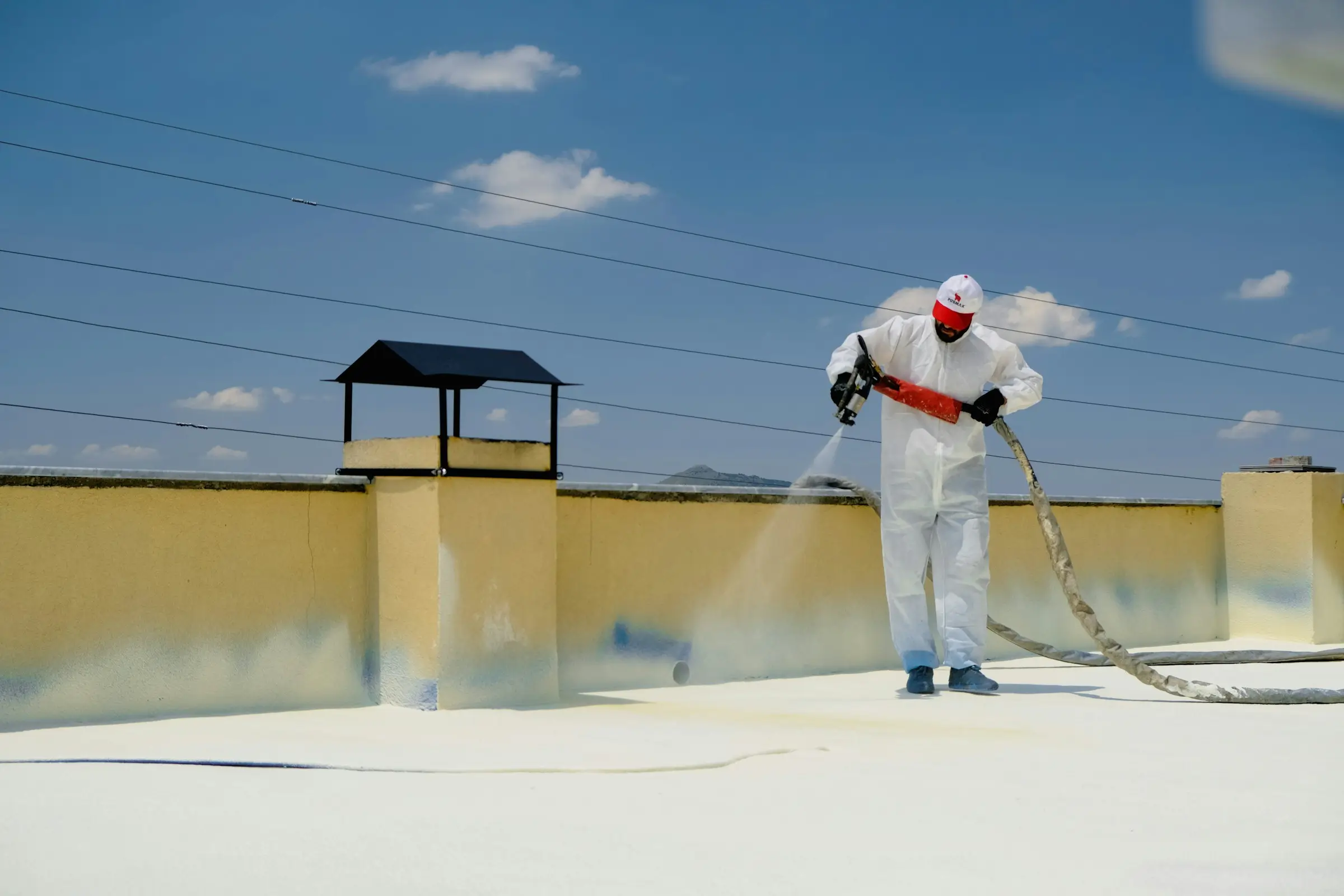
King Roofing’s media library includes a worker applying a protective coating, but an image does not establish coating as the correct answer for every flat roof. The existing material, adhesion, moisture condition, surface preparation, penetrations and drainage must be assessed. A coating cannot be assumed to correct trapped moisture, unsuitable substrate conditions or a failed transition.
A focused repair can make sense when the defect and surrounding serviceable material are understood. Replacement becomes a different decision when failures are widespread, water routes are uncertain across several areas, or repeated local work no longer produces a dependable result. The contractor should explain which condition was found, not simply present a preferred product.
Gutters, ventilation and exterior details can change the roofing service
A roof does not stop at the last shingle or membrane edge. Gutters and downspouts receive and discharge water. Soffit and roof vents contribute to attic airflow. Siding and wall details meet roof flashing at dormers, additions and other intersections. These systems may not all require work, but they need to be considered when they affect the same concern.
Toronto requires property owners to keep downspouts disconnected from the municipal sewer system and emphasizes maintaining eavestroughs and downspouts. The City’s downspout guidance recommends repairing leaks and sagging areas and directing discharge away from the home. A roof service that improves the eave but leaves water discharging badly at grade has not considered the entire route.
Ventilation deserves similar care. More vent openings are not automatically better. Existing intake and exhaust paths, blocked soffits, insulation and interior air leakage all influence the result. If a roof replacement affects vents, the proposal should state which openings are included and how the planned configuration relates to the attic.
Match the roofing service to the decision the property owner actually needs
| Owner’s situation | Best starting service | Decision the service should support |
|---|---|---|
| No active leak, but the roof is aging or has weather exposure | Condition inspection | Identify maintenance priorities, repair candidates and areas to monitor |
| One visible damaged area with otherwise serviceable surroundings | Repair assessment | Confirm a focused boundary and sound tie-in |
| Overflow, blocked outlets or standing water after storms | Drainage and roof review | Separate outlet maintenance from surface or flashing defects |
| Repeated leaks or broad material wear | Replacement evaluation | Compare another repair with a coordinated assembly renewal |
| New addition or altered roofline | Installation planning | Integrate slope, wall flashing, drainage, ventilation and existing finishes |
A property may move from one service to another after evidence is gathered. That is not a failure of the first visit. It is the purpose of a condition-based process. The owner should receive an explanation before the scope expands.
Questions that keep one Toronto roofing service from being mistaken for another
Before approving a visit or proposal, ask what the service will deliver. Will the inspection include a written or photographic condition summary? Is a maintenance visit limited to specified roof details, or does it include repair materials? Does a leak investigation include both interior evidence and safe roof access? If replacement is being discussed, are the main roof, additions and low-slope sections all part of the same evaluation?
Then ask what can change the recommendation. A shingle repair may expand if surrounding material cannot accept a reliable tie-in or concealed damage appears beneath the affected area. A flat-roof repair may change if the suspected seam is not the only water route or if surface conditions indicate a wider issue. A drainage visit may reveal that the outlet is clear but a low area continues to hold water. The company should explain these decision points before work begins.
Finally, separate the result from the sales language. “Tune-up,” “restoration” and “renewal” can mean different things between companies. The scope should use plain actions: inspect this roof plane, clear these outlets, replace damaged shingles in this boundary, renew flashing at this transition, or replace the listed roof sections. When the work is described that specifically, the owner can compare services and later verify that the approved result was delivered.
King Roofing’s real service strengths are clarity, system thinking and detail
The company’s published pages consistently emphasize a complete roof review, practical options, weather-aware detailing, a defined scope and respect for the property. Those are credible strengths because they are reflected across the home, residential, about and contact pages. The site does not publish certification, warranty, emergency-response or manufacturer claims, so those should be confirmed directly rather than assumed from an article.
Owners who need to sort a warning sign from a likely cause can continue with what a Toronto roof inspection should examine. For localized work, the Toronto roof repair decision guide explains when a focused repair may still fit. When broader wear is the issue, the replacement scope guide shows which roof areas and hidden-layer decisions to define. The King Roofing inquiry page lists the practical property details needed to begin.
